



Successful football club fundraising ideas enable clubs to raise funds for kits, equipment, pitch hire, travel, and player or coach development, alleviating some of the stress and pressure they face. Membership fees and occasional events alone rarely cover these costs, leaving volunteers stretched and committees scrambling to fill budget gaps. 87% of clubs have seen rental costs increase by 5% or more, according to the 2025 FORZA Grassroots Report.
In this article, we explore effective football club fundraising ideas, providing practical guidance on how to generate predictable income, engage your local community and reduce administrative workload. We also highlight how football clubs can use digital fundraising tools to simplify payment collection, track contributions, and make fundraising more efficient.

Table Of Contents
- What Fundraising Really Means For A Grassroots Football Club
- Why Traditional Fundraising Alone Isn’t Enough
- How Can Grassroots Clubs Approach Fundraising Strategically
- Top 4 Football Club Fundraising Ideas
- Final Thoughts: Building A Sustainable Fundraising Strategy
- Fundraising Using TeamFeePay
What Fundraising Really Means For A Grassroots Football Club
Key takeaway: Fundraising is about stability, growth, and long-term sustainability, not just collecting money.
At grassroots level, fundraising includes any activity that brings in money beyond player fees. This might include community events, donations from local supporters, or partnerships with local businesses. The goal is to create predictable income, support club operations, and fund development projects such as new kit, training equipment, or coach development.
Many clubs rely on informal tracking methods like spreadsheets or cash collections. While these approaches can work initially, they often lead to missed payments and volunteer frustration, particularly when multiple initiatives run simultaneously. Taking a more structured and digital approach allows committees to plan ahead, track contributions, and allocate funds effectively without overwhelming volunteers.
Key points:
- Fundraising covers donations, events, and local partnerships
- Structured approaches create predictable income and reduce volunteer workload
- Clubs benefit from clear tracking systems for contributions
Why Traditional Fundraising Alone Isn’t Enough
Key takeaway: One-off events like raffles rarely generate enough income to meet grassroots club needs.
Costs for pitch hire, referees, kits, and travel can quickly exceed what a single event raises. Research has found that 72% of grassroots football clubs do not have adequate funding to cover their basic costs, as per the 2025 FORZA Grassroots Report.
Clubs that rely solely on annual events often see participation drop over time, leaving volunteers to scramble when budgets fall short. Combining multiple fundraising streams, such as small recurring donations, community events, and local sponsorships, allows clubs to maintain financial stability. Even introducing one or two structured methods alongside traditional events can make a significant difference.
Key points:
- Rising operational costs exceed what one-off events typically generate
- Repeating the same events year after year can lead to declining returns
- Diversified fundraising strategies help clubs plan and maintain volunteer energy
How Can Grassroots Clubs Approach Fundraising Strategically?
Key takeaway: Combining multiple income streams with clear planning maximises results and reduces volunteer stress.
Grassroots clubs should create an annual fundraising calendar, assign volunteer responsibilities, and track income and engagement. Combining recurring supporter contributions, local sponsorships, targeted donations from players/families, and community-driven events ensures your club can cover operational costs while funding growth initiatives.
Starting small and gradually expanding initiatives keeps fundraising manageable for volunteers while still increasing financial impact.
Key points:
- Plan a calendar of recurring events and campaigns
- Assign clear roles and responsibilities to volunteers
- Track income and participation to refine strategy over time

Top 3 Football Club Fundraising Ideas
1. Strengthen Income Through Sponsorship Management
Key takeaway: Clear, structured sponsorship packages help grassroots clubs attract and retain local business partners.
Sponsorship is one of the most effective football club fundraising ideas when offers are clearly defined and packages outline exactly what businesses will receive. This can include logo placement on kits, signage around your pitch, or mentions in newsletters and social media. Businesses are more likely to contribute when they see tangible value.
Simple tracking of commitments and deliverables ensures sponsors receive what was promised, helping relationships to remain strong and renewals easier to secure.
How To Create Sponsorship Football Packages
1. Creating Tiered Packages
Offer entry-level, mid-level, and premium sponsorship options to suit businesses of different sizes. Clear descriptions of benefits make it easier to sell packages.
2. Finding Local Business Partner
Target local shops, gyms, or community organisations that benefit from exposure to your club’s supporters. Personal introductions often work best.
3. Maintaining Sponsor Relationships
Send updates on how their contributions are used and thank them publicly where appropriate. Maintaining communication encourages repeat support.
4. Tracking Deliverables
Keep a simple log of what each sponsor receives and when they received it. This ensures commitments are met without overloading volunteers.
5. Measuring Impact
Track total sponsorship income, renewal rates, and satisfaction to refine future packages.
Key points:
- Provides repeatable, predictable income from local businesses
- Structured packages make it easier to attract and retain sponsors
- Simple tracking ensures deliverables are met without overloading volunteers
In a previous post, we discussed how to secure sponsorship for your football club, it even includes a free downloadable email template pack for outreach.
2. Encourage Donations To Support Your Club
Key takeaway: Targeted contributions from players and families fund specific initiatives and foster a culture of giving.
Player and family donations that support teams, kit, travel, or special projects is another excellent football club fundraising idea. Being clear about how funds will be used helps build trust and encourages participation. Grassroots clubs can offer one-off or small recurring contribution options so families can give according to their means.
Even modest contributions, when collected consistently, can fund items that otherwise your club couldn’t afford. The benefits to your club includes consistent monthly income and increased member engagement, plus it’s effortless as it’s designed to be easily created.
5 Ways To Manage Donations
1. Defining Donation Options
Offer flexibility, allowing families to choose one-off or recurring contributions that suit their budgets.
2. Communicating Fund Usage
Explain exactly how donations will be used, e.g., new kits or tournament travel, to build trust and encourage participation.
3. Encouraging Participation
Promote the scheme during training sessions, matches, and social events. Recognition of contributors, even informally, encourages others to participate.
4. Tracking Contributions
Keep a simple record of donations and ensure follow-up reminders for recurring contributions.
5. Measuring Results
Track total donations, repeat contributions, and funds allocated to specific projects to assess effectiveness.
Key points:
- Supports specific teams, projects, or equipment needs
- Flexible donation options accommodate different supporter capacities
- Clear communication builds trust and encourages repeat contributions
3. Host A Race Night That Brings Your Club Together
Key takeaway: Race nights are engaging community events that generate revenue while strengthening club spirit.
Race nights, where participants buy tickets and bet on races or competitions, are popular at grassroots level because they combine social interaction with fundraising. Income comes from ticket sales, betting pools, and refreshments, providing multiple revenue streams in a single event. You can earn extra revenue from these events by offering race title sponsorship.
Careful planning and clear volunteer role assignments make the event manageable, even for small committees. Online ticket sales further reduce administrative strain and increase your potential reach. Successful events build community connections, encouraging repeat participation and ongoing support.
5 Steps To Managing A Successful Race Night
1. Planning The Event
Choose a venue, set a date, and prepare a schedule. Keep logistics simple to avoid over complicating volunteer tasks.
2. Selling Tickets And Entries
Promote tickets through your club, local businesses, and social media. Consider pre-sales to gauge attendance. You can sell tickets via the TeamFeePay app, giving volunteers more time to focus on the event planning.
3. Assigning Volunteer Roles
Divide responsibilities for race management and refreshments to ensure smooth operations.
4. Managing Payments During The Event
Track tickets, bets, and refreshments to avoid confusion.
5. Measuring Success
Monitor revenue, attendance, and community engagement to plan future events.
Key points:
- Generates income from ticket sales and participation
- Strengthens community engagement and club culture
- Simple planning and volunteer organisation make events feasible
Final Thoughts: Building A Sustainable Fundraising Strategy
Key takeaway: Grassroots clubs achieve long-term stability by combining multiple fundraising approaches with simple planning and consistent tracking.
Sustainable fundraising is less about one-off events and more about creating predictable, repeatable income streams that support club operations and growth. Combining recurring supporter contributions, local sponsorships, targeted player and family donations, and community-driven events like race nights allows grassroots clubs to cover costs reliably while engaging their local community.
Planning and organisation are key and every extra pound raised counts. A Patrons Scheme, a handful of local sponsors, or a well-run race night can make a meaningful difference to kit budgets, travel costs, and player development. This removes clubs from having to rely on player fees to support all club expenses. With a strategic approach, committees can reduce volunteer strain, maximise fundraising impact, and build a stronger, more resilient club.
Key points:
- Combine multiple fundraising streams for financial stability
- Keep planning simple and assign clear volunteer responsibilities
- Track income and participation to refine strategies over time
- Even modest contributions can significantly impact grassroots club budgets
Fundraising With TeamFeePay
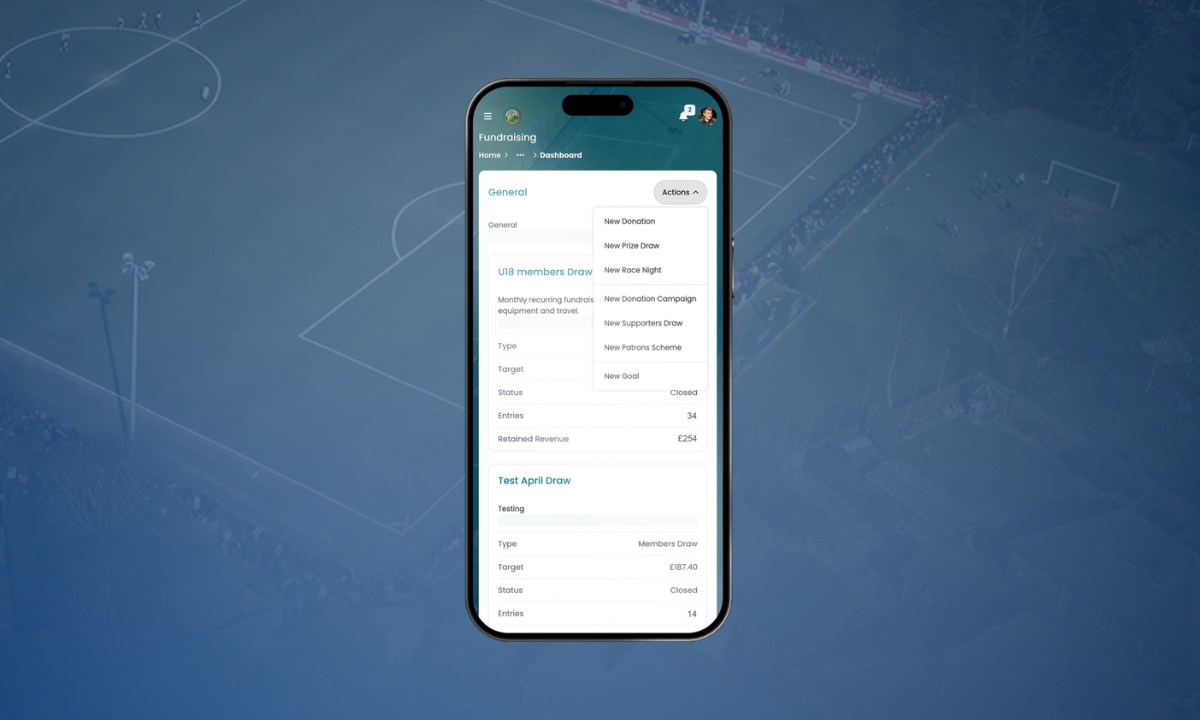
Fundraising is one of the most popular features within the app, with many clubs generating income that previously they could only ever dream of.
If you would like to explore generating more funds for your club, complete the form below to receive a demo from a member of our team. They will be delighted to showcase how the fundraising features can benefit your club.